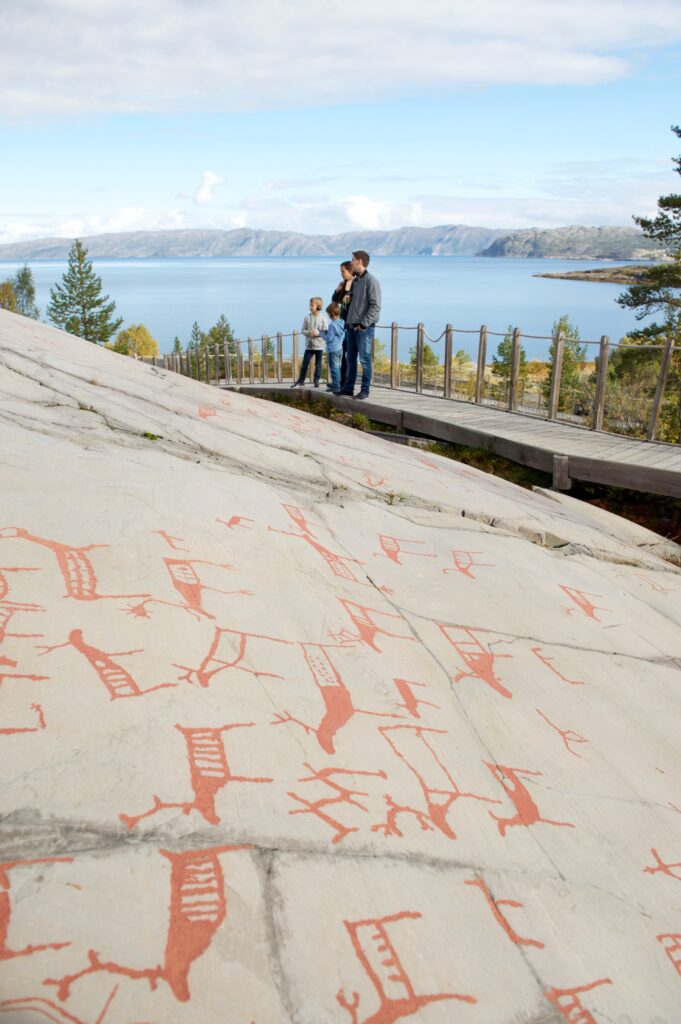
Why were the rock carvings painted red?
When the rock carvings were rediscovered in the 1970s, there was a desire to make the figures more visible to the public. At the time, it was common practice to highlight rock carvings with red paint so the motifs could be more easily seen. This made it easier to convey the stories carved into the rock – stories of hunting, rituals, everyday life and interaction with nature.
The measure was carried out with the best intentions and knowledge available at the time.
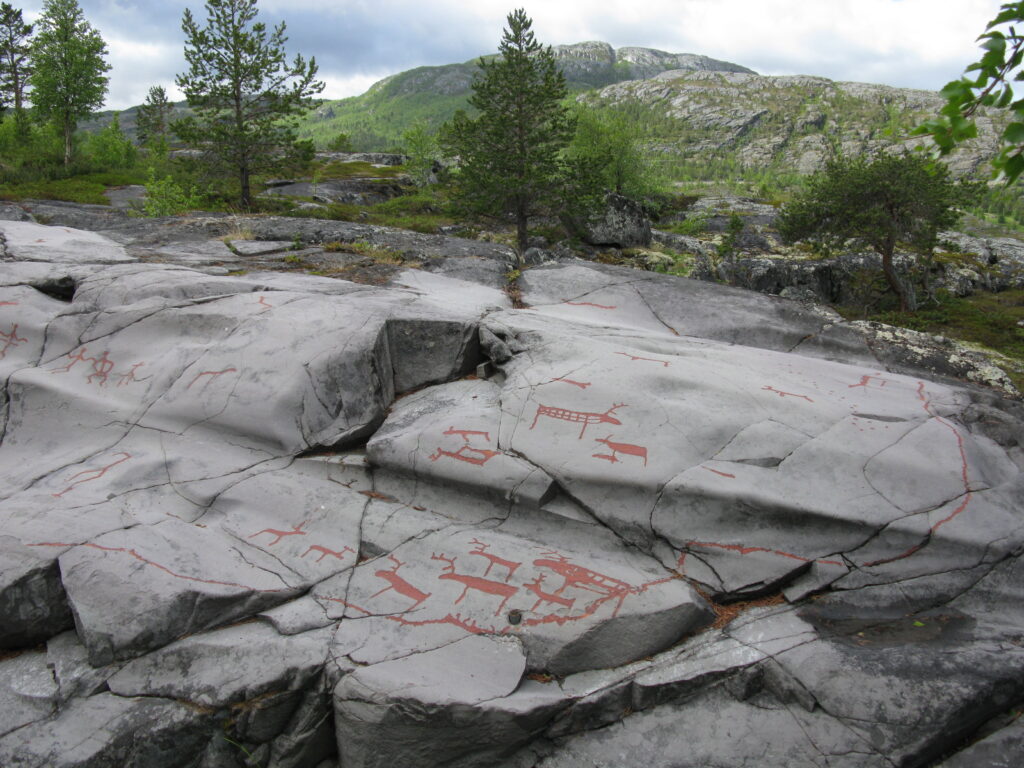
New knowledge brings new choices
Today, there is greater knowledge of how both natural forces and human intervention affect rock art over time. Research and experience have shown that the red paint can contribute to increased wear on the rock surface, for example by retaining moisture and affecting the stone when exposed to frost, rain and temperature fluctuations.
In an Arctic climate, where weather and temperatures can change rapidly and dramatically, this is particularly relevant. Over time, such factors may cause damage to the rock carvings.
Based on this knowledge, Alta Museum, in collaboration with national and international expert communities, has initiated work to remove the red paint. The process is carried out gradually and carefully, under close professional supervision, with the aim of preserving the rock art in a more sustainable way.
A meeting with the rock carvings as they originally were
As the paint is removed, the rock carvings emerge as they were originally created: carved lines in the stone, where light, shadow and nature play a central role in the experience. The figures become less striking, yet more authentic.
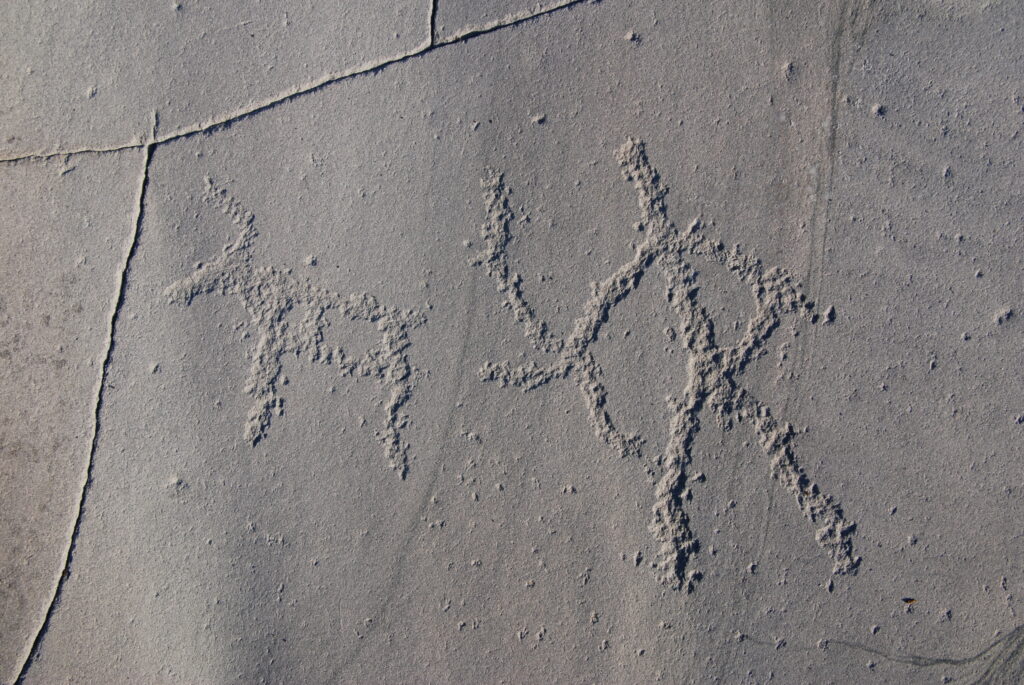
The experience requires more from the viewer, but offers deeper insight into how the rock carvings have been experienced for thousands of years.
Preservation as part of Arctic life
Removing the red paint is not only about the past, but also about the future. The conservation work reflects how cultural heritage is managed in a fragile Arctic landscape, where nature, climate and history are closely interconnected.
In Alta, nature is not merely a backdrop, but an active force that shapes both the landscape and the conditions for life. The same applies to cultural heritage. The decision to remove the red paint reflects a growing understanding of long-term responsibility, knowledge-based management and respect for the World Heritage site.
A World Heritage site brought to life
The rock carvings in Alta remain a place for learning, reflection and powerful experiences. Whether visiting the area for the first time or returning again, the landscape offers an encounter with human activity stretching back more than 7,000 years.
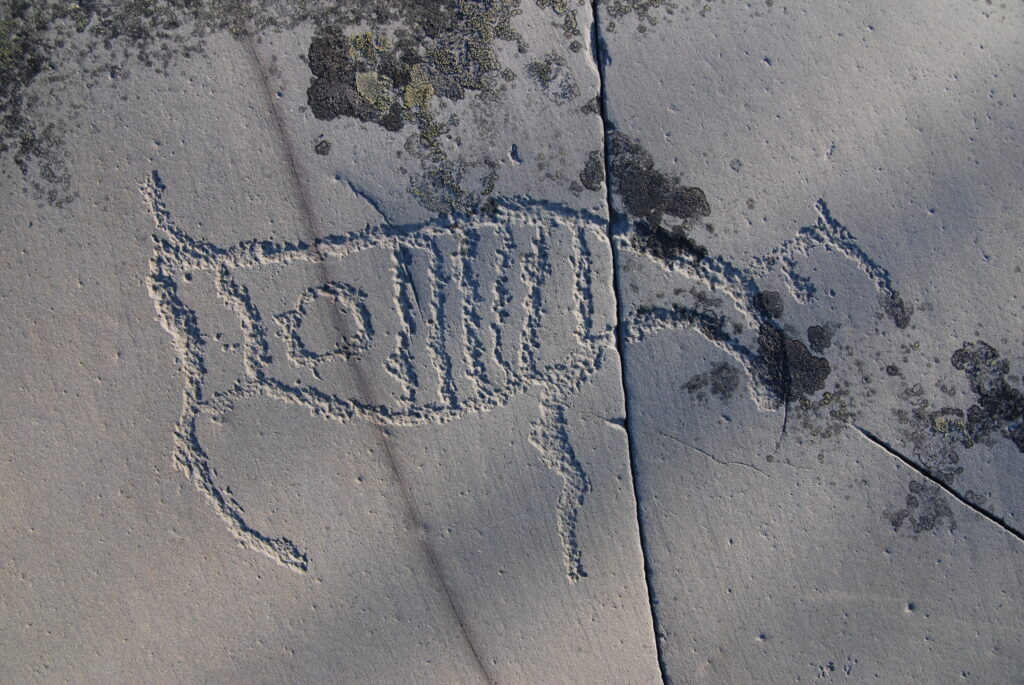
The conservation work helps ensure that future generations can continue to experience the rock carvings as part of a living Arctic landscape.
The rock carvings are on display at Alta Museum.