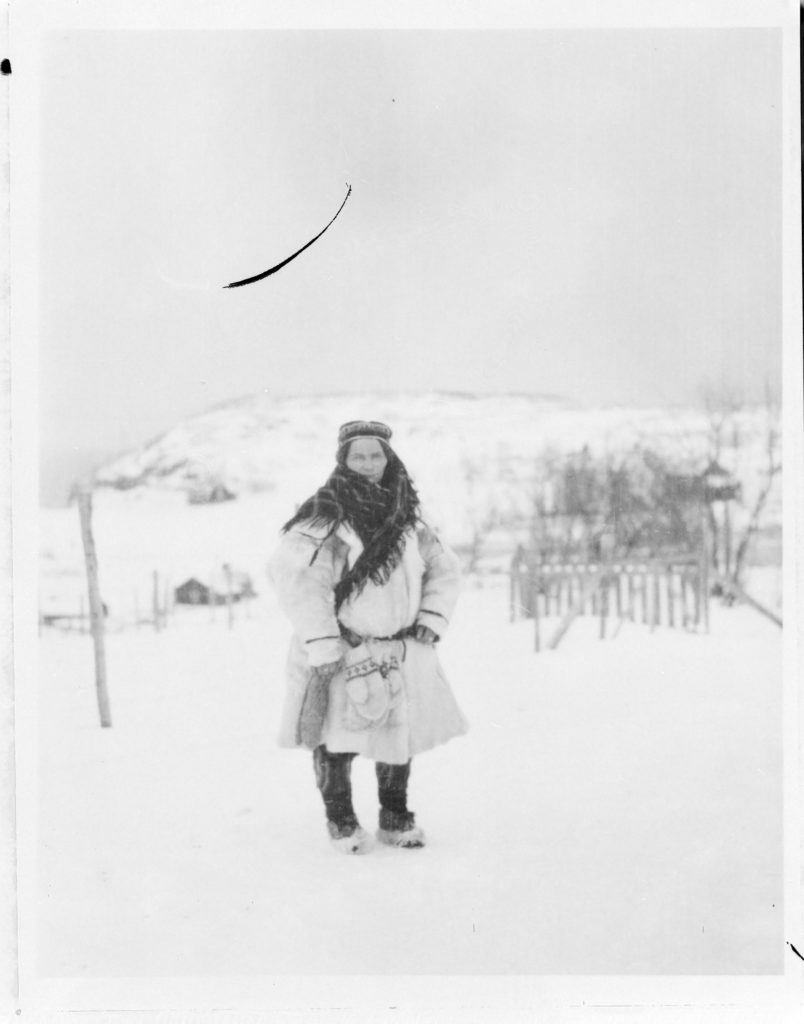
Twice a year, people from all over Finnmark gathered to sell, exchange and buy goods. Alta and Bossekop were a natural meeting point for trade, halfway between the coast and the plateau. There has been a market in Bossekop for many hundreds of years, but the first official market was held in 1836. At that time, the market was held twice a year, in December and March, and lasted three days.
Bossekop eventually became a hub where Sami, Kven and Norwegian traditions met and goods from all over the North circulated. The Sami came from far away to sell reindeer meat, reindeer skins, grouse and crafts – and made a good profit from it. Traders from Tromsø, Hammerfest and Finland traveled to Bossekop to buy the raw materials, and trade grew rapidly. In 1875, goods worth 120,000 kroner were traded, which today corresponds to around 6.5 million kroner.
This was also a relevant market for the Sea Sami who traded fish. But it wasn’t just raw materials that were traded – textiles, flour, coffee, tobacco, reindeer skins and skulls were also popular goods. The market thus became both a vital trading place and an important social meeting place for people throughout the region.
Today, the traditional Bossekop market lives on, under the auspices of the BUL sports club. The autumn market has moved into the BUL sports hall, while the spring market is part of the Borealis Winter Festival and the Finnmarksløpet. Traditional crafts, local food and local products are sold side by side – giving the public a taste of both history and the present.